Theo Hughes · 6 September 2026
Peer-Developed Digital Tools Transform Exam Study Habits Across Polish Higher Education
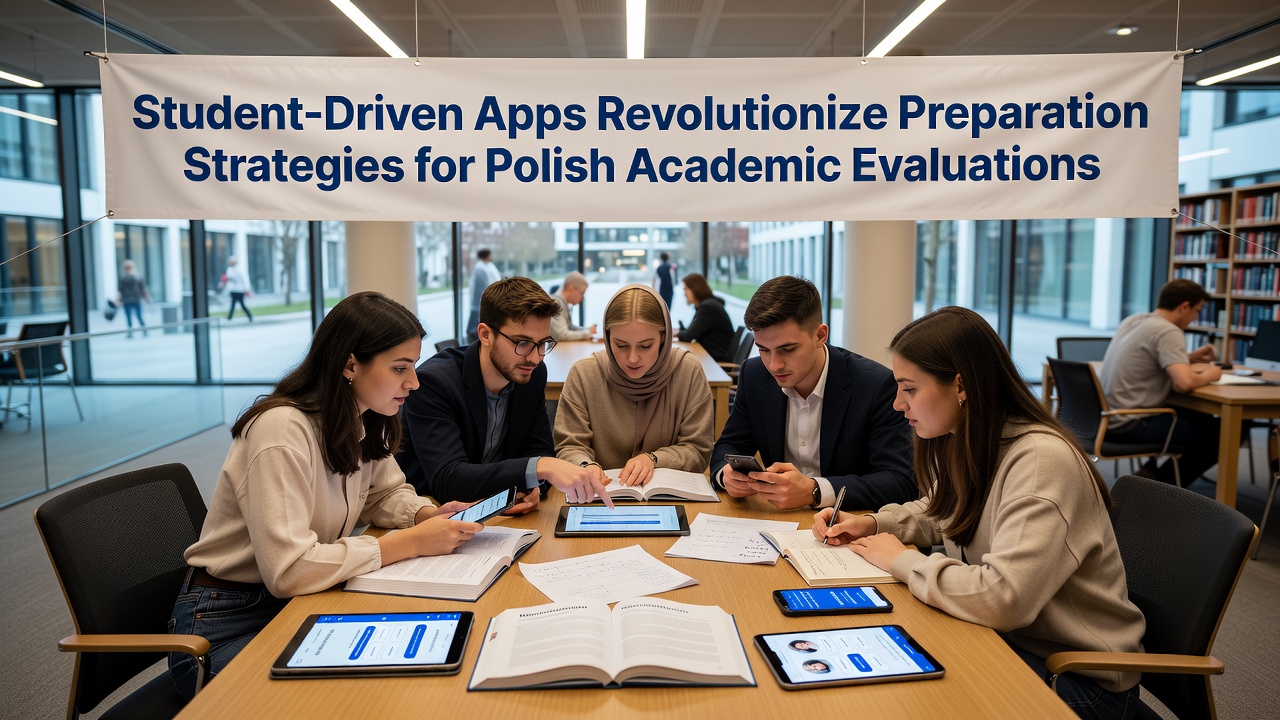
Student-initiated mobile applications have begun altering how candidates approach examinations and evaluations within Polish universities, with several platforms emerging directly from undergraduate and graduate projects since the mid-2020s. These tools focus on adaptive quizzing, collaborative note-sharing, and performance analytics that adjust to individual progress patterns, while developers often incorporate feedback loops from user communities at institutions such as the University of Warsaw and Jagiellonian University.
Development teams typically consist of computer science and education majors who identify gaps in existing commercial software during their own preparation cycles, leading to features like localized question banks aligned with specific faculty requirements and integration with the Polish grading scale. Data from institutional surveys conducted through 2025 indicated rising usage rates among first-year and second-year students preparing for mid-term assessments, particularly in fields such as law, medicine, and engineering where standardized testing formats remain prevalent.
Key Features Driving Adoption
Applications built by students frequently include spaced repetition algorithms calibrated to Polish curriculum timelines, alongside peer-to-peer discussion forums that allow real-time clarification of complex topics without requiring paid subscriptions. One platform launched in 2024 expanded its user base by adding voice-note integration for language departments, enabling audio-based review sessions that mirror oral examination formats common in humanities programs. Usage statistics compiled by university IT departments showed that participants who engaged with these apps for at least four weeks prior to evaluations recorded measurable improvements in recall accuracy compared with control groups relying solely on printed materials.
Integration with national education databases has further streamlined access, permitting automatic syncing of syllabus updates issued by the Ministry of Education and Science. Observers note that this connectivity reduces the lag between policy changes and student awareness, a factor that becomes especially relevant ahead of the September 2026 intake cycle when revised evaluation rubrics are scheduled for implementation across multiple faculties.

Evidence from Institutional Studies
Research conducted at several technical universities revealed that collaborative features within these apps encouraged group study sessions that extended beyond individual screen time, fostering discussion of exam strategies in both virtual and physical settings. Figures released by the European Commission education monitoring unit highlighted Poland's above-average growth in student-led digital innovation between 2023 and 2025, attributing part of the increase to grant programs supporting university incubators. Analysts from the OECD education directorate have documented similar trends in other European systems, yet Polish examples stand out for their rapid iteration cycles driven by direct input from the target user demographic.
Case examples include an app developed at Wrocław University of Science and Technology that incorporated past exam papers digitized with permission from faculty archives, allowing users to simulate timed conditions while receiving instant scoring aligned with official marking criteria. Participants reported that the immediate feedback mechanism helped identify weak areas earlier in the preparation window, prompting targeted review rather than uniform re-reading of all materials.
Challenges and Ongoing Adjustments
Despite expanding reach, these applications encounter obstacles related to data privacy compliance under GDPR frameworks and the need for continuous content verification to maintain accuracy across evolving course requirements. University administrators have begun establishing review panels that include both faculty members and student representatives to evaluate new releases before recommending them through official campus portals. Such oversight mechanisms aim to balance innovation speed with reliability, particularly as September 2026 approaches and institutions prepare for updated assessment protocols that may emphasize digital literacy components.
Industry reports from organizations monitoring edtech growth across the EU indicate that student-driven projects often achieve higher retention rates than top-down institutional offerings, largely because interface design reflects actual usage habits rather than assumed preferences. Partnerships with established publishers have started to emerge, allowing selected apps to incorporate licensed textbook excerpts while preserving the core community-driven development model.
Conclusion
Student-created applications continue to influence preparation routines for Polish academic evaluations by supplying accessible, customizable resources that evolve alongside user needs and institutional changes. As adoption patterns stabilize ahead of September 2026, ongoing collaboration between developers, faculty, and regulatory bodies will determine how these tools integrate into broader academic support systems. Data from multiple monitoring sources suggests sustained interest, provided privacy standards and content accuracy remain priorities throughout the development process.